

Claw Machine Pre-Shipment Inspection Checklist for Buyers
Before commercial claw machines are shipped internationally, buyers should confirm that the order matches the agreed specifications and that any required checks have been completed.
A pre-shipment inspection can help identify visible defects, missing accessories, incorrect customization, and other discrepancies before the equipment leaves the factory. It cannot guarantee that no issue will occur during transportation or future operation, but it provides a useful record of the machine's condition at the time of inspection.
1. Verify the Order Details
Start by comparing the physical machines with the purchase order and approved specifications.
Check:
Model names or references
Quantity ordered
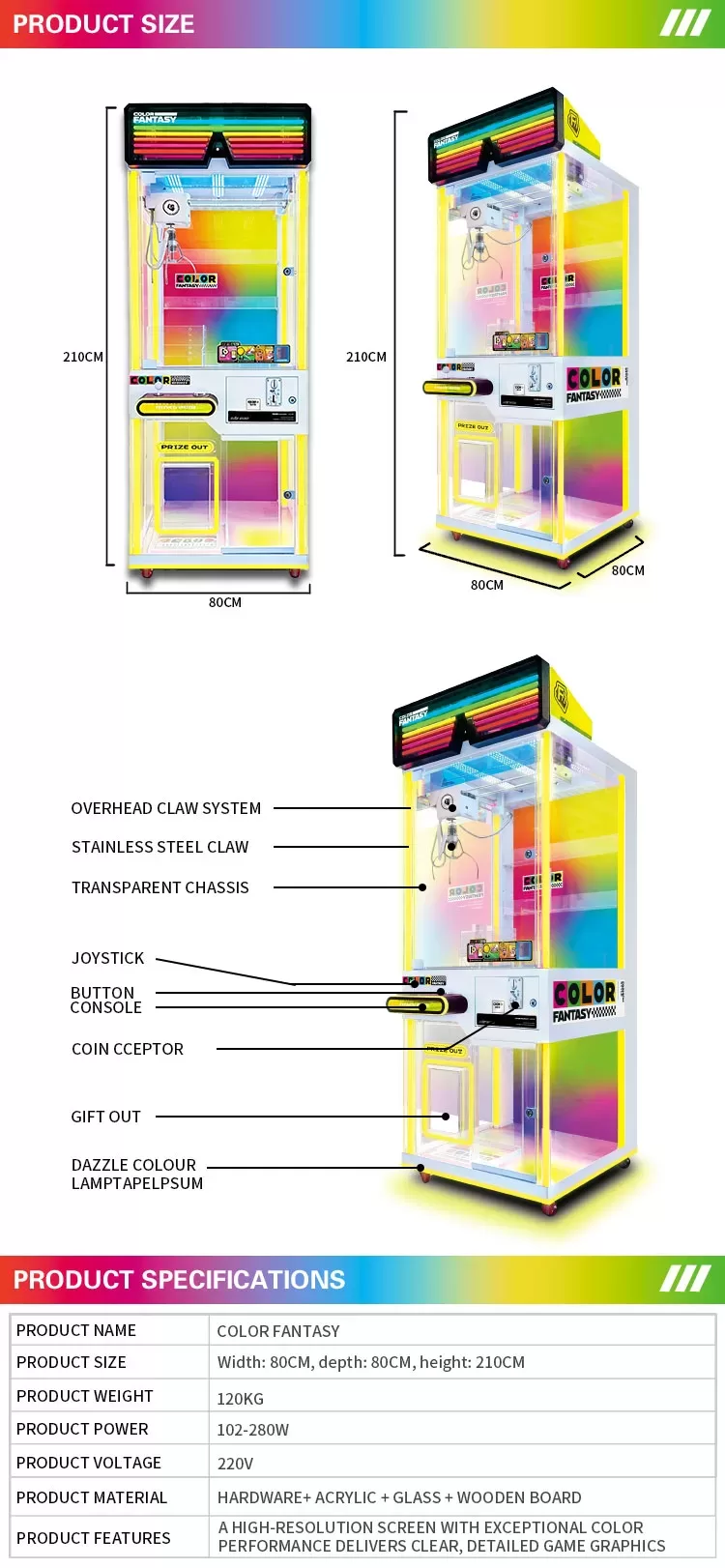
Machine dimensions where specified
Cabinet configuration
Agreed colors and graphics
Logo placement
Payment system configuration
Included accessories and documentation
For bulk orders, record the identification of the units inspected. If the order contains several models, make sure the correct specifications are used for each one.

2. Inspect the Cabinet and Exterior
Examine the accessible exterior surfaces under suitable lighting.
Look for:
Visible dents, scratches, or cracks
Damaged glass or transparent panels
Loose or misaligned exterior parts
Incorrect graphics or colors
Poorly positioned labels
Damaged doors or locks
Obvious gaps or unfinished edges
Missing agreed accessories
Compare the appearance with the approved design proof if the machines have customized graphics or branding.
Record any issue with clear photographs and a written description. Agree with the supplier on how discrepancies will be addressed before shipment.
3. Check Lighting and Display Features
Switch on the machine according to the manufacturer's operating procedure.
Check whether the configured lighting and display features operate as expected. Review the color, brightness, and placement of the lights against the agreed specification.
If the order includes custom lighting effects or specific visual settings, confirm that the approved configuration is present.
Do not assume that a machine with illuminated lights has passed all other operational checks.
4. Test the Controls and Claw Movement
The exact test procedure depends on the machine model. Using the manufacturer's instructions, verify the basic functions relevant to the agreed configuration.
Where applicable, check:
Control button response
Claw movement through its expected range
Movement consistency
Visible mechanical obstructions
Prize chute operation
Door and access panel function
Display indicators and error messages
Listen for unusual noises and record abnormal behavior. If a test identifies a safety concern or a fault that requires internal access, stop the test and request assessment by qualified personnel.
Do not adjust internal components or bypass safety mechanisms as part of a routine inspection.
5. Verify Payment System Configuration
Payment requirements vary by country and machine model. Check that the machine has the agreed payment hardware and configuration.
Depending on the order, this may involve a coin acceptor, bill validator, card payment device, or other compatible system.
Confirm the intended currency or payment configuration and follow the supplier's approved testing procedure. Where an external payment provider is involved, hardware operation alone does not establish that the service account or transaction integration is fully activated.
Document any required configuration that will be completed after delivery.
6. Review Customization and Labels
Customized orders need a separate review against the approved artwork and specification.
Check logo spelling, graphic orientation, cabinet colors, and any required language or labels. Confirm that the finished appearance is consistent across units where identical branding was requested.
If the design proof specified a particular placement or visual element, compare it with the finished cabinet rather than relying on memory or an earlier photograph.
7. Confirm Accessories and Documents
Check the items included in the order against the packing list or purchase agreement.
Depending on the model, this may include keys, approved accessories, user instructions, maintenance documentation, or other agreed items.
Verify the quantities and record any missing items before the shipment is sealed or dispatched.
8. Inspect Packaging and Shipping Preparation
Packaging should be appropriate for the machine's dimensions, weight, structure, and transport method.
Review the agreed packaging method and check for visible damage or inadequate protection. Confirm that the machine and its vulnerable components are secured according to the supplier's shipping procedure.
Record the package count and, where relevant, the package dimensions and gross weight.
For international shipments, also confirm the agreed shipping documents and responsibilities. Any special handling, labeling, or import documentation should be addressed before dispatch.
9. Document the Inspection Results
Use a checklist to record the inspection outcome.
| Inspection item | Result | Notes |
|---|---|---|
| Model and quantity | Pass / Follow-up | ______ |
| Cabinet condition | Pass / Follow-up | ______ |
| Graphics and logo | Pass / Follow-up | ______ |
| Lighting and display | Pass / Follow-up | ______ |
| Controls and movement | Pass / Follow-up | ______ |
| Payment configuration | Pass / Follow-up | ______ |
| Accessories and documents | Pass / Follow-up | ______ |
| Packaging | Pass / Follow-up | ______ |
Attach photographs or videos where useful. If any item requires correction, agree on the action and timing with the supplier and document whether a reinspection is necessary.
10. Decide Whether Independent Inspection Is Appropriate
For larger or more complex orders, an independent inspection company may provide additional verification. This can be especially useful when the buyer cannot visit the factory in person.
Before booking an inspection, define the scope, sample size, acceptance criteria, reporting format, and handling of identified defects.
An inspection report is most useful when the criteria are agreed in advance and directly reflect the purchase specification.
Work With Fanhong Arcade Factory
Fanhong Arcade Factory is based in Panyu, Guangzhou, China, and supplies commercial claw machines and other arcade equipment.
Buyers can discuss machine specifications, customization details, and the checks appropriate for their order before shipment. For factory visits or third-party inspections, arrangements should be confirmed in advance.
Learn more about our factory and arcade solutions.
Frequently Asked Questions
Is a pre-shipment inspection necessary for every order?
The need depends on order value, complexity, risk, and the buyer's requirements. Even for smaller orders, checking the model, appearance, configuration, and agreed accessories is useful.
Can a video replace a physical inspection?
A video can help verify visible features and demonstrate selected functions, but it may not reveal every defect. For higher-risk orders, consider a clearly defined physical or independent inspection.
What happens if a machine fails inspection?
Document the issue and contact the supplier before shipment. Agree on corrective action, timing, and whether another inspection is required under the purchase agreement.
Does passing inspection guarantee safe delivery?
No. A pre-shipment inspection records the condition and checks performed at that time. Appropriate packaging, transport arrangements, insurance where applicable, and receiving procedures are also important.
Discuss Your Inspection Requirements
Ordering commercial claw machines for export? Contact us to discuss the model specifications, customization details, and inspection arrangements for your order.
Website: https://www.hxt5.com/
WhatsApp: +86 199 2830 9481
Email: Fanhong668@gmail.com