

Multilingual Arcade Machines for International Markets: What Buyers Should Check
When purchasing arcade machines from overseas manufacturers, buyers often focus on appearance, dimensions, payment systems and price.
However, language compatibility is another detail worth confirming before ordering.
For businesses operating in international markets, the language displayed on a machine can influence how easily customers understand the instructions and interact with the equipment.
This is particularly important for machines with digital screens, menus, operating instructions or customer-facing messages.
1. Why Language Compatibility Matters
Customers should be able to understand the basic instructions displayed on a machine.
If the interface uses a language unfamiliar to local users, customers may need additional assistance before operating the equipment.
A suitable language configuration can help:
Make instructions easier to understand
Improve the customer-facing experience
Reduce confusion during operation
Support different target markets
Present a more localized business environment
The importance of language support depends on the machine type and how much information it displays.
2. Identify Which Parts Need Translation
Not every arcade machine has the same language requirements.
A basic mechanical machine may display very little text, while a touchscreen arcade game may contain several menus and operating instructions.
Before purchasing, identify which parts of the machine contain text.
These may include:
Startup screens
Main menus
Game instructions
Customer prompts
Settings menus
Error messages
Promotional screens
For machines with digital interfaces, ask the manufacturer which sections can be configured or translated.
3. Confirm Available Language Options
Do not assume that every machine supports multiple languages.
Ask the supplier for the language options available for the exact model you are considering.
Useful questions include:
Which languages are currently supported?
Can the interface language be changed?
Can customer-facing text be customized?
Are translated instructions available?
Does changing the language affect the game program?
Is additional development or configuration required?
Get confirmation before placing the order, especially if your project requires a specific local language.
4. Consider Local Language and Cultural Requirements
Language translation is not only about changing individual words.
Instructions should be understandable to the intended customers and suitable for the local market.
For example, some markets may use different terminology for payment, game controls or prizes.
If your business operates in a market with multiple commonly used languages, consider whether the machine needs to support more than one language.
You should also review product labels, safety notices and other information according to applicable local requirements.
5. Check Text Display and Readability
Even a correctly translated interface may be difficult to use if the text is too small or poorly arranged.
When reviewing a localized interface, consider:
Text size
Screen layout
Button labels
Character display
Instruction clarity
Consistency between menus
Ask the supplier for photos or videos of the actual interface where possible.
For custom translations, have a fluent local-language reviewer check the text before final approval.
6. Understand the Difference Between Interface Language and Game Content
Some buyers may assume that changing the menu language also changes every part of the game.
This is not always the case.
The interface, game instructions, audio, graphics and other content may be managed separately.
Ask the manufacturer exactly which elements can be changed and whether additional customization is available.
Confirm the scope in writing to avoid misunderstandings.
7. Test the Configuration Before Bulk Orders
For larger projects, it is useful to confirm the language configuration before ordering multiple machines.
Ask the supplier to demonstrate the selected interface or provide an approved configuration sample where available.
Check the displayed text, buttons and instructions with someone familiar with the target language.
This is particularly useful when the equipment will be distributed to several locations.
8. Prepare Your Translation Materials
If the manufacturer supports custom text, prepare translation materials in an organized format.
For example:
| Original text | Required language | Approved translation |
|---|---|---|
| Start Game | Target language | Confirmed translation |
| Insert Coin | Target language | Confirmed translation |
| Select Game | Target language | Confirmed translation |
| Collect Prize | Target language | Confirmed translation |
Use final approved wording rather than sending several alternative translations.
Also confirm whether the manufacturer needs a specific file format or text length.
9. Confirm Technical Support for Language Changes
Some interface changes may require software configuration.
Before ordering, ask who is responsible for applying the language settings and whether the final configuration will be tested before shipment.
Keep a record of the approved language version and any related instructions.
This can help if additional machines are ordered later.
Frequently Asked Questions
Q1: Do all arcade machines support multiple languages?
No. Language options depend on the specific machine and its control system. Confirm available options with the manufacturer.
Q2: Can I customize the language on a claw machine?
Some models may support customized customer-facing text or interface settings. The available scope depends on the model.
Q3: Can I translate the game instructions myself?
You can prepare approved translations, but the manufacturer must confirm whether and how those translations can be integrated into the machine.
Q4: Should I confirm language settings before bulk purchasing?
Yes. Confirming the language configuration before a large order can reduce the risk of receiving machines that do not meet your market requirements.
Discuss Your International Arcade Equipment Requirements with Fanhong
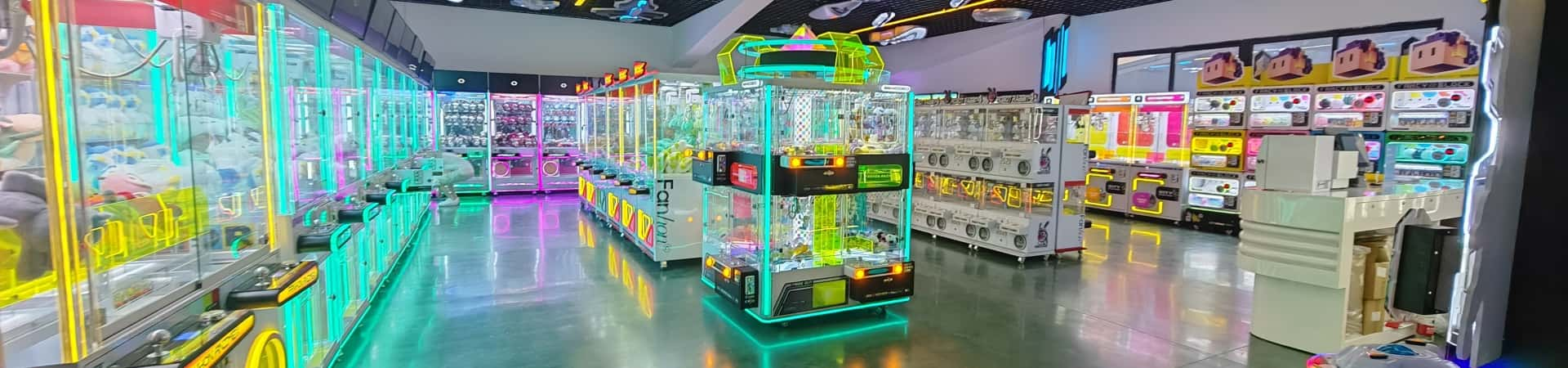
Fanhong Arcade Factory is based in Panyu, Guangzhou, China, supplying commercial claw machines, capsule vending machines and other arcade equipment to overseas buyers.
If your project requires specific language or interface configurations, share your requirements with our team so the available options can be checked for the selected model.
Contact us:
WhatsApp: +86 199 2830 9481
Email: Fanhong668@gmail.com
Website: https://www.hxt5.com/
Visit our company profile to learn more about Fanhong Arcade Factory.